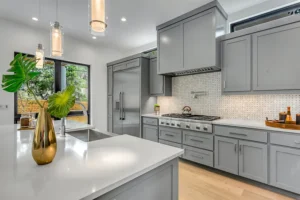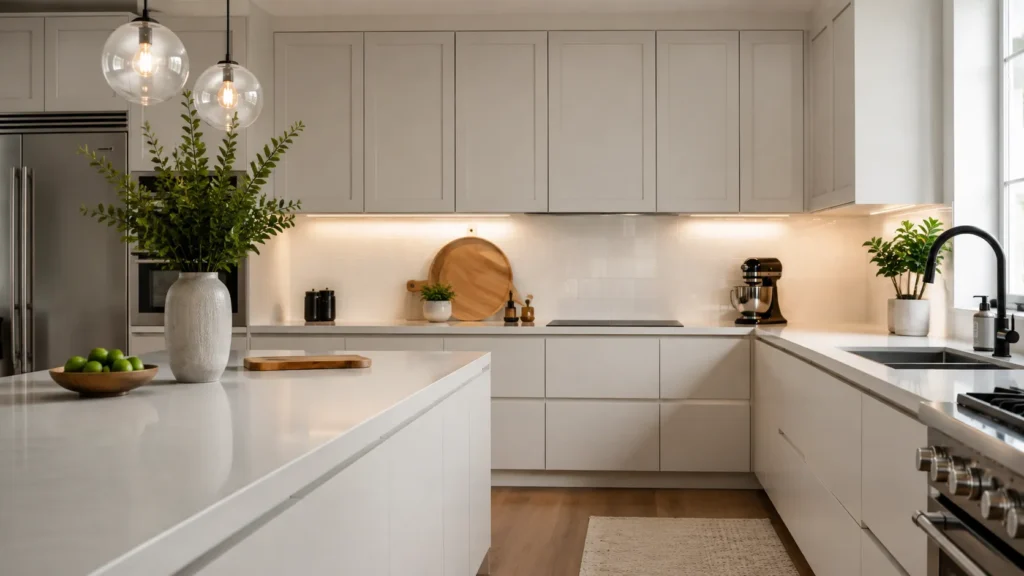
Cabinets usually don’t reveal moisture-related problems immediately. A kitchen remodel may look exactly as expected the day installation is finished. The changes often appear later, after several Iowa summers and winters have passed. A drawer starts rubbing slightly against the frame, or a cabinet door no longer lines up quite the way it once did. Also, painted joints become more noticeable than they were during the first year. These problems often come up after a few years due to moisture issues.
In many cases, these changes are linked to something homeowners rarely think about: the constant expansion and contraction caused by seasonal humidity fluctuations.
Cedar Rapids experiences a wide range of conditions throughout the year. Summer air can be warm and humid for extended periods, while winter heating systems create a much drier indoor environment. Cabinet materials respond to those changes whether they are visible or not.
The Same Kitchen Can Experience Multiple Climates Each Year
Related brief: How Fargo’s Extreme Winters Impact Security Camera Performance and What Homeowners Should Look For
It is easy to think of cabinets as permanent fixtures, but the materials used to build them remain influenced by the surrounding environment.
Wood naturally absorbs and releases moisture. During humid months, components may expand slightly. During drier periods, they contract. High-quality cabinets are designed with this movement in mind. Lower-quality products often struggle to accommodate it.
This is why two kitchens that appear similar on installation day may perform very differently five or ten years later.
Homeowners researching kitchen cabinets in Cedar Rapids, IA, often focus on door styles and finishes first. The stability of the materials beneath those finishes frequently has a greater impact on long-term performance.
Not Every Wood Product Behaves the Same Way
Solid wood remains a popular choice, but species selection matters. Some hardwoods demonstrate better stability than others when exposed to changing humidity levels. Construction methods matter as well. Cabinet doors built from properly selected hardwoods generally perform better than lower-grade products assembled from less stable materials.
Engineered materials have also become increasingly common, particularly in cabinet box construction. Furniture-grade plywood, for example, is valued not only for strength but also for its ability to maintain dimensional stability under changing conditions. Buyer comparing framed versus frameless boxes need to weigh these build details alongside material stability.
The conversation is rarely about choosing between solid wood and engineered materials. More often, it involves determining where each material performs best.
The Finish Does More Than Influence Appearance
A cabinet finish serves a practical purpose beyond color and sheen. Quality finishes help slow the exchange of moisture between the air and the cabinet material itself. This protection becomes particularly important in kitchens, where cooking, dishwashing, and daily activity regularly affect humidity levels.
Painted cabinetry often receives attention because of its appearance, yet the quality of the finishing process plays a major role in how well those surfaces hold up over time.
The difference may not become apparent immediately. It often becomes visible after years of seasonal change.
Looking Beyond the Showroom Sample
Showroom displays are viewed under controlled conditions. But the same look and feel cannot be replicated in a real kitchen as it operates under very different circumstances. Cabinetry ages with daily use, temperature changes, moisture from cooking, and seasonal changes in humidity. The most durable projects are usually built around materials and construction methods chosen for local conditions rather than short-term appearance alone.
Homeowners in Cedar Rapids, IA, want kitchen cabinets that will last long. The material stability and quality of construction and finishing methods all combine to determine how cabinets respond to Iowa’s changing climate year after year.