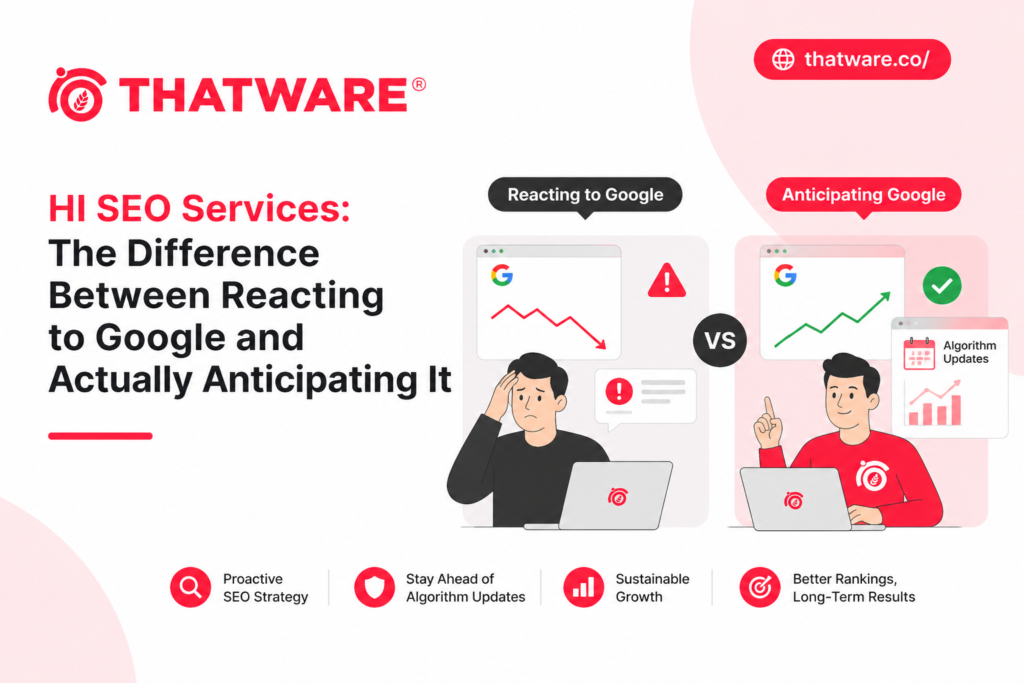
Most SEO work, if you’re honest about it, is reactive. Google does something, rankings shift, teams scramble to figure out what changed, recommendations get updated, implementations follow weeks or months later. By the time the response is in place, the competitive landscape has already reshuffled around whoever moved faster. And then the next update happens.
This isn’t a criticism of SEO practitioners — the reactive cycle is baked into how the industry has always operated. But it creates a persistent structural disadvantage: you’re always optimizing for the last version of the algorithm, not the next one. And if you understand where search is heading, “the last version” and “the next one” are increasingly far apart.
Hyper-Intelligence SEO — HI SEO — is an attempt to break out of that cycle by building a predictive layer into SEO strategy. The idea isn’t to claim you can perfectly forecast Google’s next move. It’s that the direction of search is more legible than most brands acknowledge, and that building strategy around where things are going produces consistently better long-term results than chasing where things have been.
Why the Direction of Search Is Actually Readable
Here’s something that gets overlooked in the day-to-day focus on algorithm updates: Google has been remarkably consistent about the direction it’s heading for over a decade. The signals are there in public communications, patent filings, product launches, and the logic of what Google is trying to accomplish as a business.
Related brief: When Water Doesn’t Feel Right: A Thoughtful Look at TDS and What We Can Actually Do About It
The trajectory is clear: search is moving toward understanding intent rather than matching keywords, toward evaluating genuine expertise and trustworthiness rather than manufactured authority signals, toward serving complex multi-part queries rather than simple lookup tasks, and toward integrating AI synthesis rather than returning lists of links. Each of these trends has been visible for years before it became dominant in ranking behavior.
Brands that read these trends early and built toward them — investing in genuine topical authority, entity clarity, content depth, and user experience quality before those signals became dominant ranking factors — got the compounding benefits of first-mover positioning. Brands that waited for the algorithm change to make the investment necessary paid more for the same results later, in a more competitive environment.
What HI SEO Actually Involves
Hi seo services are built around a systematic approach to reading the direction of search and making investment decisions accordingly. This operates at a few different levels.
Trend analysis and signal monitoring: tracking not just algorithm updates but the broader signals — patent filings, Google product changes, search quality rater guideline updates, industry research — that reveal the direction of development. This isn’t about chasing news; it’s about building a coherent picture of the medium-term trajectory.
Predictive content strategy: identifying what questions and topics will have high search value in the next 6-18 months, based on emerging trends in your category and the evolving search behaviors of your audience. Publishing content that answers tomorrow’s high-volume queries before the competition recognizes them as priorities.
Future-proofing optimization decisions: making technical and structural choices that align with where search is heading, not just what it currently rewards. Site architecture decisions, schema implementation choices, content organization — these have compounding effects over years, and decisions made to satisfy the current algorithm without regard for direction can create technical debt that’s expensive to undo later.
The Predictive Content Advantage
The most immediately actionable dimension of HI SEO for most brands is predictive content strategy, and it’s worth spending some time on how it works in practice.
Most content strategy is backward-looking: you analyze current search volume data, identify high-volume keyword opportunities, and build content to capture existing demand. That’s fine — existing demand is real and worth capturing. But it means you’re entering every content opportunity after it’s already competitive.
Predictive content strategy is forward-looking: you identify what will be searched for 6-18 months from now, based on trends in your industry, adjacent category behavior, and the direction of consumer interest. You publish high-quality content before the demand materializes fully. When the wave of search interest arrives, your content already has the age, authority, and engagement history to rank immediately.
This isn’t speculative — it’s pattern recognition. Industry conferences announce what’s coming. Professional discussions reveal emerging concerns and questions. Adjacent market developments signal what’s heading your way. Customer conversations surface questions before they become Google searches. Organizations that systematically harvest these signals and act on them have a consistent first-mover advantage in content.
Anticipating Algorithm Changes Before They Hit
This is the more controversial claim of predictive seo services, so let’s be precise about what’s being claimed and what isn’t.
Nobody can predict the exact timing, scope, or mechanics of a Google algorithm update before it’s released. That claim would be nonsense. What IS predictable, based on clear directional signals, is the general direction of what Google will reward more and penalize more over time.
Google has been explicit for years that thin content, manufactured link signals, keyword stuffing, and poor user experience will be progressively devalued. Brands that took that seriously early didn’t need to scramble when core updates targeted these patterns. Google has also been explicit about the direction of E-E-A-T, AI Overview integration, and entity understanding. Brands building toward these signals now aren’t guessing — they’re reading the map.
The strategic posture this enables isn’t “we know what the next update will do.” It’s “we’re building toward what Google has consistently said it wants, so any movement in that direction benefits us rather than penalizes us.” That’s a fundamentally different risk profile than optimizing for current signals without regard for their durability.
Building Compounding Advantage Over Time
The compounding nature of forward-looking SEO strategy is what makes it worth the additional analytical investment. Every correct anticipatory investment — a content cluster that’s already ranking when the demand wave arrives, a technical structure that aligns with where ranking signals are heading, an entity profile built before AI search makes entity clarity critical — produces returns that exceed what reactive investment in the same area would have generated.
The best-performing brands in organic search over 5-10 year periods are almost never the ones that executed the most efficiently on current best practices. They’re the ones that read the direction correctly and made investments ahead of the curve — not recklessly, but thoughtfully, based on a coherent view of where search was heading. That’s what HI SEO at its best is trying to operationalize.