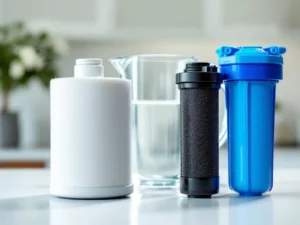
Water is easy to overlook when everything seems normal. You turn on the faucet, fill a glass, start the shower, and move on. But when you notice white scale around fixtures, an unusual odor, or water that doesn’t taste quite right, it suddenly becomes a much bigger part of the conversation.
For homeowners in the Shenandoah Valley, water conditions can vary from property to property. Some households may deal with hard water, sediment, iron, or other concerns, while others may simply want to improve the overall quality of the water they use every day.
That’s where whole-home filtration comes into the picture.
Start With the Water in Your Home
Before choosing equipment, it’s worth understanding what’s actually coming through your pipes.
A water test can reveal characteristics that aren’t obvious just by looking at a glass of water. Depending on the source, testing may identify hardness, pH, iron, sulfur, chlorine, sediment, and other water-quality factors.
This is especially important for homes using private wells. Groundwater conditions can vary considerably, and the treatment that works for one property isn’t necessarily appropriate for another.
If you’re researching a Whole House Water Filter in Front Royal, VA, begin with the water itself rather than starting with a particular brand or piece of equipment.
Once you understand the problem, the technology becomes much easier to choose.
What Is Whole-Home Filtration?
A whole-home filtration system treats water at or near the point where it enters your property. Instead of filtering water only at the kitchen sink, the treatment can affect water distributed throughout the house.
That means the water used for showers, laundry, cooking, cleaning, and other household activities can pass through the treatment system.
Related brief: Better Water at Home Starts With Understanding What’s Really in Your Tap
The exact configuration depends on the water-quality concerns.
Some systems focus on sediment and particles. Others use carbon filtration to reduce chlorine and improve taste and odor. Additional treatment may be needed for hardness, iron, sulfur, or specific contaminants.
The important thing is matching the system to the water.
The Everyday Benefits Can Be Surprisingly Noticeable
The Whole Home Filtration Benefits aren’t always dramatic in the way a new appliance or renovated kitchen might be. They’re usually smaller, everyday improvements.
You may notice fewer particles in the water. Faucets can stay cleaner. Showers may feel different. Water used for laundry and cleaning can have fewer unpleasant characteristics.
And then there are the little moments.
You fill a glass from the kitchen faucet and don’t hesitate before drinking it. You make coffee without wondering why the flavor seems off. You wash your hands without noticing a strong chemical smell.
These things become normal pretty quickly — which is actually a sign that the system is doing its job.
Hard Water Is a Common Concern
Hard water contains dissolved minerals, particularly calcium and magnesium. While hardness isn’t automatically a safety problem, it can create plenty of household frustration.
Mineral scale can accumulate around faucets and showerheads. It can also affect water heaters, plumbing fixtures, dishwashers, and other appliances over time.
If you’ve ever scrubbed a stubborn white ring around a faucet, you know exactly how annoying it can be.
A water softener is generally the appropriate technology for reducing hardness. Filtration and softening aren’t interchangeable, so testing is important when deciding which equipment your home actually needs.
Don’t Confuse Filtration With Softening
This is one of the easiest mistakes to make when researching water treatment.
A filter and a softener don’t necessarily do the same job.
Filtration can address things such as sediment, chlorine, taste, odor, or certain contaminants, depending on the technology. A softener is specifically designed to reduce hardness minerals.
Some homes may need one. Others may benefit from a combination.
A qualified water-treatment professional can explain the difference and recommend equipment based on the results of testing rather than simply selling a standard package.
What About Drinking Water?
Whole-home treatment can improve the overall water entering the house, but some homeowners want an additional level of treatment specifically for drinking water.
That’s where point-of-use systems can be useful.
Reverse osmosis, for example, is commonly installed beneath a kitchen sink to provide treated water for drinking and cooking. Carbon filtration can also be useful when taste and chlorine are the primary concerns.
A whole-house system and a drinking-water system don’t have to compete. In some homes, they work together quite nicely.
The whole-house system addresses broader water concerns, while a dedicated kitchen system provides additional treatment where drinking water matters most.
Consider Your Water Source
The source of your water should influence the treatment approach.
Municipal water generally goes through centralized treatment before reaching your home, although characteristics such as chlorine taste and mineral content can still be noticeable.
Private wells are different. The water comes directly from groundwater, and conditions can be influenced by local geology, well construction, and environmental factors.
For well owners, regular testing is especially important.
Don’t wait until the water looks strange to investigate. Some water-quality concerns aren’t visible at all.
Installation and Maintenance Matter
A good filtration system isn’t a “set it and forget it” appliance.
Filters need replacement. Components can wear out. Tanks, valves, and connections may require periodic inspection.
Installation should also be handled carefully. Incorrect sizing, poor connections, insufficient pressure, or unsuitable equipment can undermine system performance.
Ask about maintenance before purchasing. Find out how often filters should be changed, what replacement parts cost, and whether professional service is available.
Those details may seem boring during the buying process, but they’re important once the system has been sitting in your home for a few years.
Choosing a System Without Overcomplicating It
There are plenty of sophisticated water-treatment systems available today. That’s useful, but it can also make the decision feel more complicated than it needs to be.
Start with testing.
Then ask three simple questions: What is wrong with the water? Where do I need treatment? How much maintenance am I comfortable handling?
From there, compare appropriate technologies, installation requirements, warranties, and long-term costs.
Don’t automatically choose the system with the most stages or the longest list of features. More isn’t always better.
The right system is the one that addresses your home’s actual needs.
Better Water, One Ordinary Day at a Time
Whole-home filtration isn’t about making water sound fancy. It’s about making an everyday resource more comfortable and useful.
When the system is correctly selected, professionally installed, and maintained, the benefits can become almost invisible — and that’s a good thing.
You shower, cook, clean, do laundry, fill a glass, and carry on with your day.
No second thoughts. No constant scrubbing of mineral buildup. No wondering why the tap water tastes strange.
Sometimes the best home improvements are the ones you barely notice because they simply make everyday life work a little better.