There’s something incredibly satisfying about a home that feels like you. Not the overly styled showroom kind, or the “trend-of-the-moment” copycat, but one that actually supports your day-to-day and tells a story. Your story.
From the casual Friday night hangouts in the living room to Sunday dinners that stretch into slow conversations in the dining area, and every thoughtful touch in between—great design isn’t about flash. It’s about feeling. Function. Flow.
The spaces we use the most deserve the most care. And it starts with asking better questions: How do you live in your home? How do you want to feel in each room? Once you know that, everything else becomes a matter of layering detail with intention.
Your Living Room Isn’t Just for Guests
Let’s start with the real star of the show: the living room. For many of us, it’s the most used—and most misused—space in the home. It’s where we crash, scroll, stretch out, and connect. Or at least, it should be.
Related brief: Why Whole-Home Water Filtration Can Make Everyday Life Easier
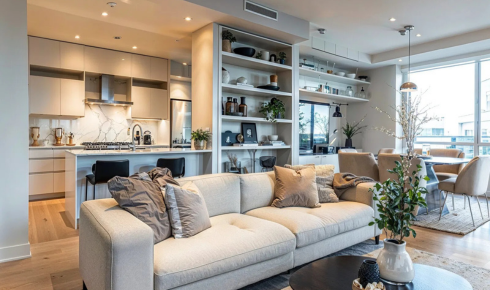
When designing living room interiors, the goal isn’t perfection—it’s personality. What you want is a space that invites. That feels warm on tired evenings and open on bright mornings. A room where the seating actually faces each other (because conversation matters) and where the lighting doesn’t make you feel like you’re in a department store at 9 p.m.
Think layered lighting (floor lamps, sconces, dimmers), soft materials you actually want to touch, and furniture that fits—not just the space, but your life. Got kids? Pets? A love for game nights? Your living room should reflect that. It’s not about impressing your guests. It’s about honoring your everyday.
Dining Isn’t Dead—It’s Just Changing
There’s this belief that formal dining rooms are obsolete. That people don’t sit down for meals anymore. And while yes, lifestyles are changing, the truth is—we still crave a place to gather. To unplug. To eat something more intentional than whatever we’re balancing on our laps in front of the TV.
That’s where thoughtful dining room design steps in. And no, it doesn’t have to be stiff or formal. It just needs to fit. A table that works with the space (round tables are magical in tight rooms), lighting that sets the mood, and storage that keeps clutter out of sight but essentials close.
The key is to design for your real rituals. Maybe it’s a weekly dinner with extended family. Or maybe it’s just you and your partner sipping wine and catching up. The design should support that. Bonus points if you can create a flexible space that doubles for work or creative projects when not in “dinner mode.”
Custom Projects Make a House a Home
Let’s talk about the details—the nooks, built-ins, window seats, reading corners, and architectural flourishes that give a home its soul. These are the touches that don’t just add functionality, but character.
That’s where custom home projects shine. You’re not buying a one-size-fits-all storage unit. You’re building a solution that’s integrated. Maybe it’s a mudroom bench with shoe cubbies for your growing family. Or a wall of bookshelves that finally give your collection a home. Or a banquette seat that turns an awkward corner into your favorite morning coffee spot.
Custom doesn’t have to mean extravagant. It just has to mean considered. When design is done with intention, even the smallest spaces begin to carry weight and meaning.
Tying It All Together: Flow Over Flash
One of the biggest mistakes in residential design? Treating each room like an island. The best homes have flow. Not just visually, but emotionally. That doesn’t mean every room needs the same color scheme or aesthetic—but there should be a narrative that ties them all together.
Think about transitions. How does the mood change from your bright, open living room to your cozier dining space? What unifies them—a shared flooring material, a consistent tone in the lighting, or maybe a repeating texture?
You’re crafting a journey, not just decorating rooms. The moments between spaces are just as important as the spaces themselves.
Start with What You Love—Then Build Out
If all of this sounds overwhelming, don’t panic. You don’t need a master plan to start. Sometimes, it’s as simple as upgrading your living room rug. Or rethinking how your dining room is lit. Or finally commissioning that built-in you’ve been sketching in your head for years.
Start with what bothers you. What feels off? What space do you avoid using? What habit or ritual would you love to create at home? That’s where the design journey begins—not with trends or rules, but with needs. And with that, you can build something beautiful, functional, and entirely yours.
Final Thought: Design for Real Life, Not Just Instagram
It’s easy to get caught up in perfection. In glossy images and curated spaces that look more like sets than homes. But real homes are messy, evolving, and wonderfully imperfect.
Design isn’t about making everything picture-perfect. It’s about making your life better. A little more comfortable. A little more connected. A little more you.
So whether you’re refreshing your living room interiors, reimagining your dining room design, or dreaming up custom home projects that speak to your lifestyle—do it with your story in mind.