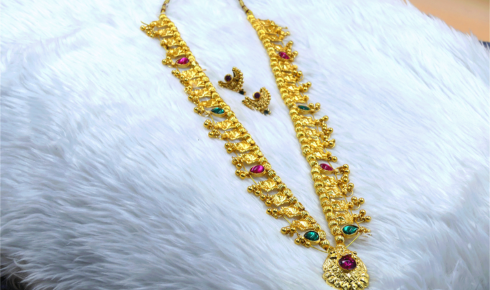

In the vast and glittering landscape of regional Indian adornments, few pieces command as much reverence and admiration as the Kolhapuri Saaj. Originating from the historic city of Kolhapur, this magnificent necklace is far more than an example of skilled gold craftsmanship. It is widely regarded as a wearable expression of mythology and tradition.
For centuries, it was the favored ornament of royalty, and today it holds a sacred place in the bridal traditions of Maharashtra. Many families planning a traditional Maharashtrian wedding consider the Kolhapuri Saaj an essential part of the bridal trousseau. Its bold and intricate aesthetic makes it instantly recognizable, but it is the spiritual symbolism woven into its design that truly elevates its importance. Heritage jewellery houses such as Waman Hari Pethe Sons continue to preserve and reinterpret this iconic necklace, ensuring that its cultural significance remains alive for modern brides.
Decoding the sacred symbolism
To truly appreciate this ornament, it is important to understand the Kolhapuri Saaj necklace’s meaning. Unlike many necklaces that focus purely on decorative patterns, this traditional Maharashtrian necklace design tells a story through its structure.
A classic Saaj is made of a series of carefully crafted gold leaves or pendants known as paan, linked together with delicate gold wires and beads. Traditionally, the necklace contains 21 pendants. Ten of these represent the ten avatars of Lord Vishnu, symbolizing divine protection and cosmic balance. Eight pendants represent the Ashtamangal, the eight auspicious symbols believed to invite prosperity and positivity.
The remaining pendants often include the ruby-adorned Saaj Ghat at the center, along with motifs such as the sun, moon, and floral elements. Together, they represent life, harmony, fertility, and continuity. This deep symbolism is what transforms the Saaj from a decorative necklace into a meaningful heirloom.
The centerpiece of the bridal trousseau
Because of its cultural and visual significance, Kolhapuri Saaj bridal jewellery often becomes the focal point of a bride’s wedding look. When families curate a Maharashtrian wedding gold necklace set, the Saaj typically serves as the central ornament around which other jewellery is layered.
It is traditionally worn just below the Thushi choker and above longer necklaces such as the Lakshmi Haar or Mohan Mala. The closely arranged gold leaves create a rich-textured collar that looks especially striking against traditional wedding sarees like the Paithani or Nauvari.
Brides visiting Waman Hari Pethe Sons jewellery showrooms often explore different Saaj variations depending on their wedding styling preferences. Some choose the classic 21-leaf design while others opt for slightly lighter versions that maintain the traditional look while offering greater comfort.
Styling the Saaj for modern weddings
Although deeply rooted in tradition, the Kolhapuri Saaj has found new relevance in contemporary bridal styling. Modern brides increasingly enjoy experimenting with ways to integrate heritage jewellery into fresh silhouettes and wedding events.
For pre-wedding ceremonies, engagement functions, or evening receptions, the Saaj is often paired with Indo Western outfits or structured silk blouses with lehengas. This styling approach highlights the intricate goldwork of the necklace while allowing it to stand out as the main statement piece.
Design experts at Waman Hari Pethe Sons frequently guide brides on how to balance traditional jewellery with modern outfits, ensuring the Saaj remains the highlight without overwhelming the overall look.
Understanding the investment
The craftsmanship behind a Kolhapuri Saaj requires exceptional skill, which makes it an important investment piece within a bridal collection. The Kolhapuri Saaj price in Maharashtra depends on several factors, including the daily gold rate, the total weight of the gold used, and the intricate making charges involved in crafting each pendant.
Many reputed jewellers, including Waman Hari Pethe Sons, offer variations of the Saaj with different pendant counts or lighter structures. These alternatives allow brides to experience the beauty of this traditional necklace while choosing a design that aligns with their wedding budget.
The Kolhapuri Saaj continues to remain one of the most treasured ornaments in Maharashtrian bridal jewellery. Its symbolism, craftsmanship, and timeless beauty ensure that it remains relevant across generations, making it both a meaningful and lasting part of a bride’s wedding story.